Community / Users list / HarriiWebber

HarriiWebber
# Veteran observations on online casino real money play in Great Britain

Having spent the better part of three decades navigating the back offices and floorboards of this trade, I have seen the digital shift transform from a niche curiosity into a behemoth that now defines how we spend our leisure time. When I first started out, the idea of carrying a fruit machine in your pocket would have sounded like science fiction, yet here we are in an era where online casino real money games are accessible with a few taps on a piece of glass. The landscape has matured significantly since those early, unregulated days, and while the convenience is undeniable, the complexity for a newcomer has grown alongside the technology.
I remember when a "remote" bet meant ringing up a smoke-filled shop and hoping the lad on the other end heard your instructions clearly over the din of the 2:30 at Kempton. Today, the scale of the industry is staggering, with online casino games alone generating £5.7 billion in Gross Gambling Yield in the year to March 2026, a figure that reflects just how deeply these platforms have integrated into British culture. It is not just about the money, though; it is about the structural shift in how we approach risk, moving from a social activity in a physical building to a private one conducted via a mobile phone.
For someone just starting their journey, the sheer volume of options can be overwhelming, and it is easy to forget that behind the flashing banners and "instant" wins lies a heavily regulated framework designed to keep things fair. The Gambling Commission, which serves as the primary regulator for online gambling in Great Britain, has tightened the screws significantly over the last few years to ensure that operators are not just taking deposits but are actively looking out for their customers. This is a far cry from the wild west of the early two-thousands, and understanding this regulatory backdrop is the first step toward playing sensibly.
## Regulatory framework and local standards
The core of everything we do in the British market is the Gambling Act 2005, a piece of legislation that has been poked, prodded, and updated more times than I care to count. It established the foundation for how remote casino, betting, and bingo operators must function if they want to touch a single penny of a British player's money. The most significant turning point I witnessed was the Gambling (Licensing and Advertising) Act 2014, which shifted the focus to a "point of consumption" model, meaning if you are sitting in London or Glasgow, the site you are using must have a Gambling Commission licence regardless of where their servers are buried.
This level of oversight is something I often have to explain to younger colleagues who think the industry is just about fancy graphics and fast servers. In reality, the regulator demands rigorous affordability checks and constant monitoring of play patterns to prevent the kind of fallout we saw in the old days of unchecked betting. The total Gross Gambling Yield for the customer-facing market reached £17.5 billion in the year to March 2026, and you do not reach those numbers without a framework that, for the most part, the public feels they can trust. It is a massive responsibility for the operators, and the fines for slipping up are now large enough to make even the biggest CEOs break into a cold sweat.
One of the most visible changes recently has been the introduction of stake limits on online slots, which are the engine room of the online casino sector, generating £4.8 billion in the year to March 2026. As of April 2025, a £5 stake limit for adults went live, followed shortly by a stricter £2 limit for those aged 18 to 24 in May of the same year. These measures are designed to slow the pace and reduce the potential for rapid losses, something that simply did not exist when I was learning the ropes and people could burn through a month's wages in a single afternoon session without anyone blinking an eye.
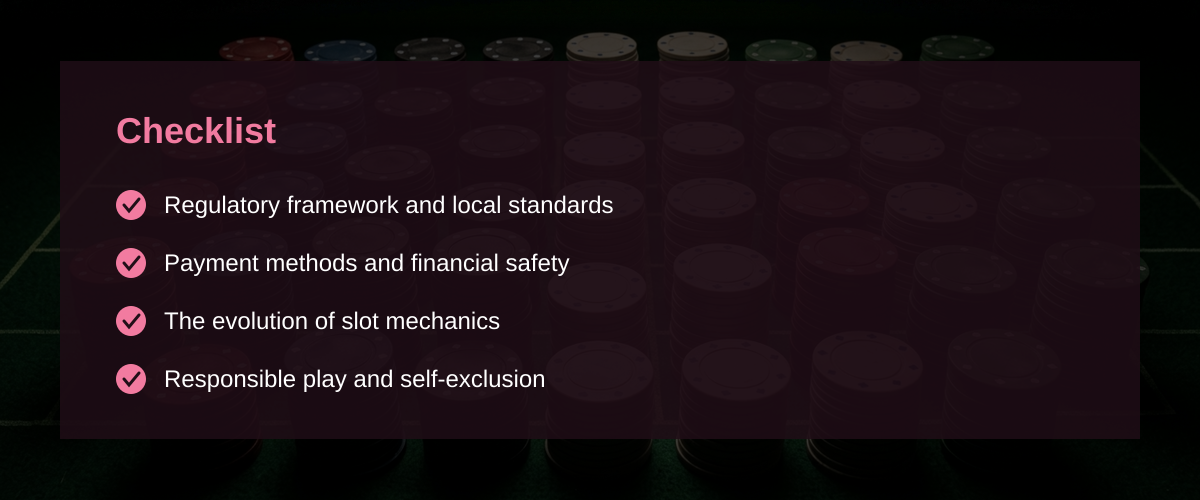
## Payment methods and financial safety
When it comes to moving your money, the British market has some very specific rules that you will not find in other parts of the world, most notably the total ban on credit cards for gambling. This was a massive shift for the industry, but one that was frankly overdue, as it ensures that people are playing with money they actually have rather than borrowing their way into a hole. Most players nowadays stick to familiar territory, using debit cards or PayPal, which offer a layer of security and speed that makes the old days of waiting for a cheque to clear seem like the dark ages.
Apple Pay and Paysafecard have also become staples for those who prefer not to share their bank details directly with every site they visit, providing a buffer that I personally recommend to anyone asking for my advice. The speed of withdrawals has become the new battleground for operators; where we used to tell customers to wait five working days, people now expect their winnings to hit their account before they have finished their next cup of tea. However, you must remember that these fast payouts are often contingent on you having passed all the necessary identity and affordability checks required by the Gambling Commission.
To give you a better idea of what to expect when looking at the financial side of things, I have put together a small breakdown of the most common methods used across the country today.
| Method Type | Common Example | Typical Speed | Main Benefit |
| --- | --- | --- | --- |
| Debit Card | Visa / Mastercard | 1-3 Days | Universal acceptance across all licensed sites. |
| E-Wallet | PayPal | Under 24 Hours | High security and very fast withdrawal processing. |
| Mobile Payment | Apple Pay | Instant Deposit | Convenient for those playing on smartphones. |
| Prepaid Voucher | Paysafecard | Instant Deposit | Excellent for strict budgeting and privacy. |
## The evolution of slot mechanics
If you look at the sheer volume of activity, with online slots spins reaching 24.4 billion in the quarter from April to June 2025 alone, it is clear where the heart of the modern casino lies. In my early days, a slot machine had three reels, a few cherries, and a lever that actually did something mechanical inside the cabinet. Today, these games are complex mathematical models with thousands of ways to win, cascading symbols, and bonus rounds that feel more like a video game than a traditional gamble. The transition from physical cogs to Random Number Generators (RNG) was the biggest hurdle the old-school players had to overcome, as many simply did not believe a computer could be fair.
The reality is that these modern games are tested to the nth degree by independent labs before they ever see the light of day on a licensed platform. Every spin is an independent event, and while the "house edge" is always there, the transparency today is light years ahead of what we had in the seventies or eighties. I often tell newcomers that the best way to approach these games is to treat them as a form of paid entertainment, much like going to the cinema or a football match, rather than a way to make a living. The moment you start thinking you can outsmart the machine is the moment you have already lost the battle.
When you are browsing through the lobby of a site like [casperbets](https://casperbetscasino.com/), you are seeing the result of millions of pounds in research and development aimed at keeping you engaged. This is why the regulator has stepped in with the stake limits I mentioned earlier; the speed at which these games move can be hypnotic. I have seen many a veteran punter get caught out by the "fast play" features that have since been curtailed, proving that even those with years of experience need the occasional guardrail to keep their habits in check.
## Responsible play and self-exclusion
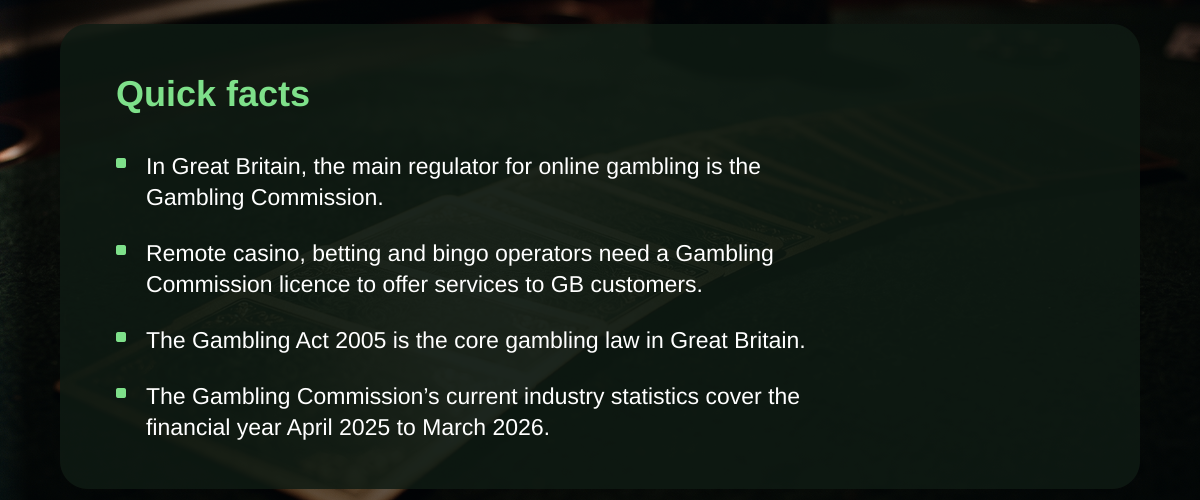
One thing I always insist on when mentoring someone new to the industry is a deep understanding of the safety net available in Great Britain. We have one of the most robust systems in the world, spearheaded by GAMSTOP, the national self-exclusion scheme. In the old days, if you wanted to ban yourself, you had to walk into every single betting shop in the high street and hope the manager remembered your face; now, one registration covers every licensed online operator in the country. It is a powerful tool that has saved countless individuals from their own worst impulses, and it is something we take very seriously on the operational side.
The industry reported 4.5 million average monthly active online accounts in the early months of 2025, and with that many people involved, the social responsibility aspect cannot be ignored. Every licensed site is required to provide tools that allow you to set your own limits, whether that is a daily deposit cap or a time-out for a few days. I always advise setting these up before you even place your first bet, as it is much easier to make rational decisions when your heart rate is normal and there is no money on the line yet.
If you find yourself straying from the path of fun, there are a few clear signs that every veteran knows to look for in their own behaviour.
* Spending more time or money than you originally intended when you logged on.
* Chasing losses by increasing your stakes to try and "break even" after a bad run.
* Neglecting daily responsibilities or social engagements to spend time on a gambling app.
* Feeling irritable or anxious when you are not able to place a bet or check a game.
The Gambling Commission reported that the Remote Casino, Betting and Bingo sector accounted for 46 percent of the total market in the year to March 2025, which shows just how mainstream this has become. With that visibility comes a greater need for personal accountability and a reliance on the systems put in place to protect the vulnerable. It is a far better environment than the one I grew up in, where "responsible gambling" was a phrase you rarely heard, but the risks remain the same if you do not respect the game.
## The reality of winnings and taxes
A question I get asked at nearly every social gathering, once people find out what I do for a living, is how much the taxman takes from a big win. In Great Britain, we are in a somewhat unique position compared to our cousins across the pond, as winnings from gambling are generally not subject to UK income tax for recreational players. This is a massive benefit that many take for granted, but it is important to remember that the tax is paid by the operators themselves through the Point of Consumption tax, which feeds directly back into the treasury. You get to keep what you win, which is a rare bit of good news in the financial world!
However, do not mistake "tax-free" for "easy money," as the odds are always calculated to ensure the house stays in business over the long run. I have seen people win life-changing sums on a single spin of a progressive jackpot, but for every one of those, there are millions of spins that return nothing or just a fraction of the stake. The transparency required by the 2005 Act means that every game must display its Return to Player (RTP) percentage, and I strongly suggest you look at those numbers before you start, as they give you a realistic expectation of how the game performs over thousands of rounds.
The Remote Casino, Betting and Bingo sector’s Gross Gambling Yield of £8.3 billion in the year to March 2026 did not come from thin air; it came from the collective house edge across millions of accounts. Understanding that you are essentially paying for the entertainment of the game, rather than investing in a financial product, is the most important lesson I can give you. If you walk away with a profit, treat it as a lucky bonus, not a reflection of your skill or a sustainable income stream.
## Reflections on a changing industry
Looking back at how far we have come, the industry today is unrecognisable from the one I joined as a young man. The transition from smoke-filled rooms to sleek mobile interfaces has brought gambling into the 21st century, but the core human elements of risk and reward remain unchanged. The British market remains one of the most regulated and safest in the world, thanks to the constant vigilance of the Gambling Commission and the implementation of schemes like GAMSTOP. We have seen total online bets and spins reach 26.1 billion in a single quarter, a scale of activity that would have been physically impossible in the era of paper slips and mechanical reels.
The introduction of stake limits and mandatory affordability checks might seem like a hindrance to some, but to those of us who have seen the alternative, they are a welcome evolution. The trade has learned that a sustainable customer base is far more valuable than a short-lived one, and the shift towards player protection is a reflection of that long-term thinking. Whether you are interested in the fast-paced world of slots or the strategic depth of live dealer games, the tools are there to ensure your experience remains a positive one, provided you use them wisely.
In the end, the secret to longevity in this game is simple: respect the numbers, know your limits, and never bet money that is meant for the rent or the groceries. The industry will continue to change, new technologies will emerge, and the regulators will undoubtedly find new things to worry about, but the basic principles of sensible play will always hold true. It has been a long and winding road from the old betting shops to the digital platforms of today, and while I might miss the smell of the turf occasionally, the safety and transparency of the modern British market is something we should all be proud of. Play smart, stay informed, and always keep your head above the water.


HarriiWebber
??
School Idol Festival
Join date
October 30, 2026 12:26:41 +0000
(UTC)
Screenshot


Game
School Idol Festival
Report account
Share